Your disabled customers need more than a perfect building. They need a prepared team.
WelcoMe is the operating system for inclusive service design. Audit barriers, prepare for visits, train staff that actually remember. Welcome everyone properly.
2 minutes · no signup · instant recommendations
View PricingTrusted by venues across the UK




The Platform
Three products. One operating system.
WelcoMe connects barrier audits, visit preparation, and staff training into a single system. Each product works alone. Together, they transform how your venue serves disabled customers.
Audits
Find the barriersIdentify and track barriers across mobility, communication, information, and environmental factors.
Learn moreVisits
Prepare for every customerCustomers share access preferences via their WelcoMe Key. Your team gets a practical preparation brief before every interaction - in person, by phone, or on video.
Learn moreTraining
Staff that actually rememberSpaced repetition maintains knowledge over time. Not tick-box compliance. Genuine competence.
Learn moreSee It In Action
Built for real venues, real teams, real customers
From venue dashboards to individual visit preparation, WelcoMe gives your team everything they need at their fingertips.
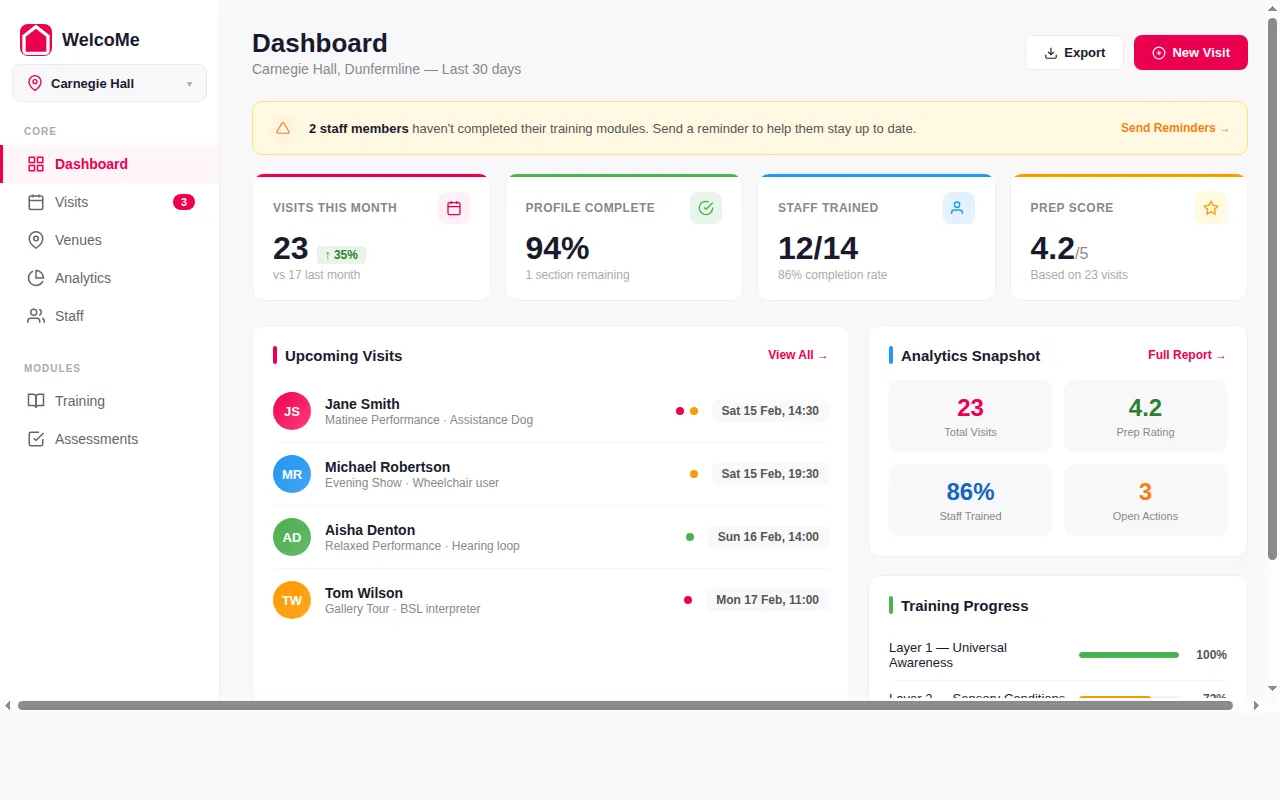
Venue Dashboard
Your accessibility command centre. Track barriers, visits, and training progress at a glance.
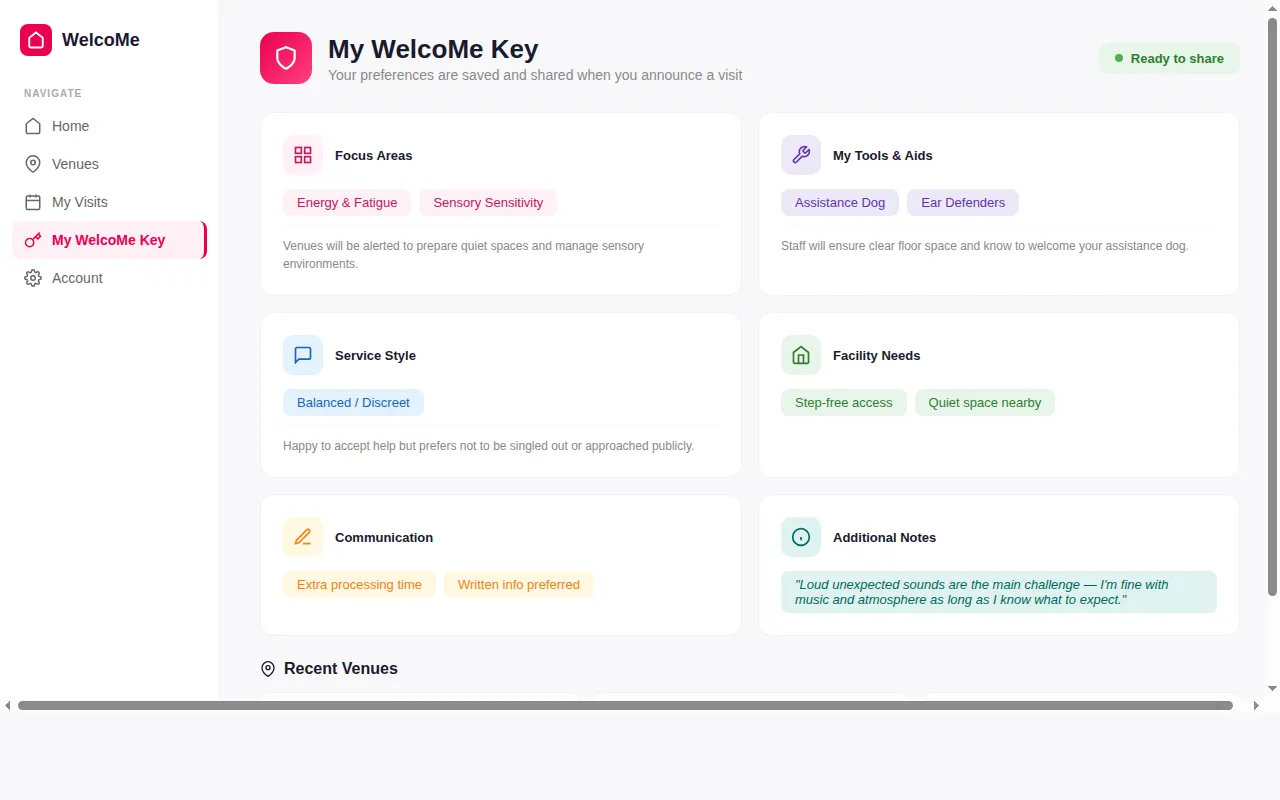
WelcoMe Key
Customers set their access preferences once. Every venue they visit is prepared.
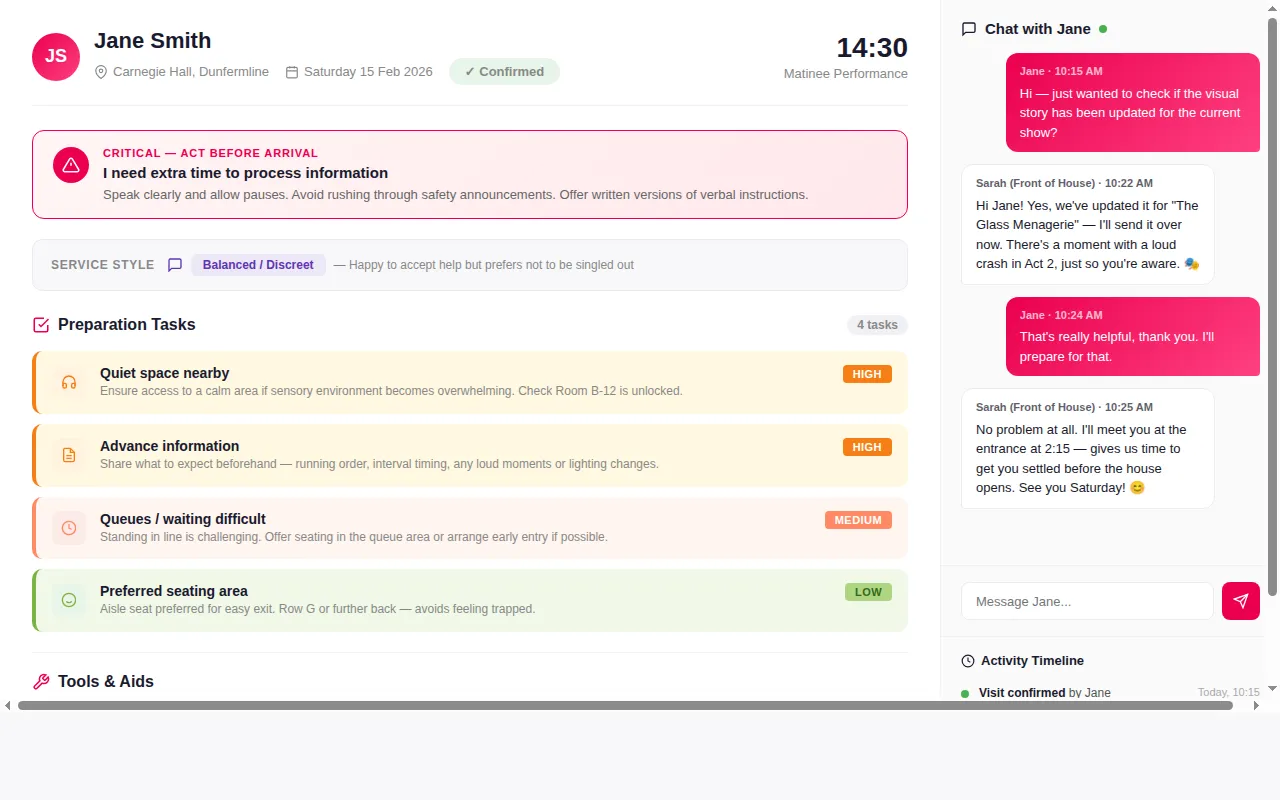
Visit Preparation
Staff see exactly what each customer needs before every interaction. No guessing, no scrambling.
What is the social model of disability?
The social model of disability says that people are disabled by barriers in the environment, not by their bodies or minds. Steps, narrow doorways, audio-only announcements, and untrained staff are barriers. When barriers are removed, disabled people can participate equally. This is different from the medical model, which focuses on "fixing" the individual. WelcoMe is built entirely on the social model: the platform helps venues identify barriers, prepare for customer visits, and train staff to remove barriers rather than "help" people. The result is better service for disabled customers and better business outcomes for venues.
WelcoMe helps you identify those barriers and remove them. That's it. No charity. No compliance checkbox. Just good service for everyone.
- Barriers are the problem, not people
- Customer in control of what they share
- Preparation, not patronising
Annual spending power of disabled households
Have abandoned a purchase due to barriers
Of disabilities are not visible
UK adults are disabled
Ready to welcome everyone properly?
Start with a free pulse check to identify your biggest accessibility gaps.